In the world of fertility treatments, the “more is better” philosophy—characteristic of Conventional IVF—isn’t always the right fit for everyone. If you’re looking for a less invasive approach or have specific health concerns, you’ve likely come across Natural Cycle IVF and Mini IVF.
While they sound similar, they serve different needs. Here is a deep dive into how they compare, the pros and cons, and who benefits most from each.
1. Natural Cycle IVF: Working with Nature
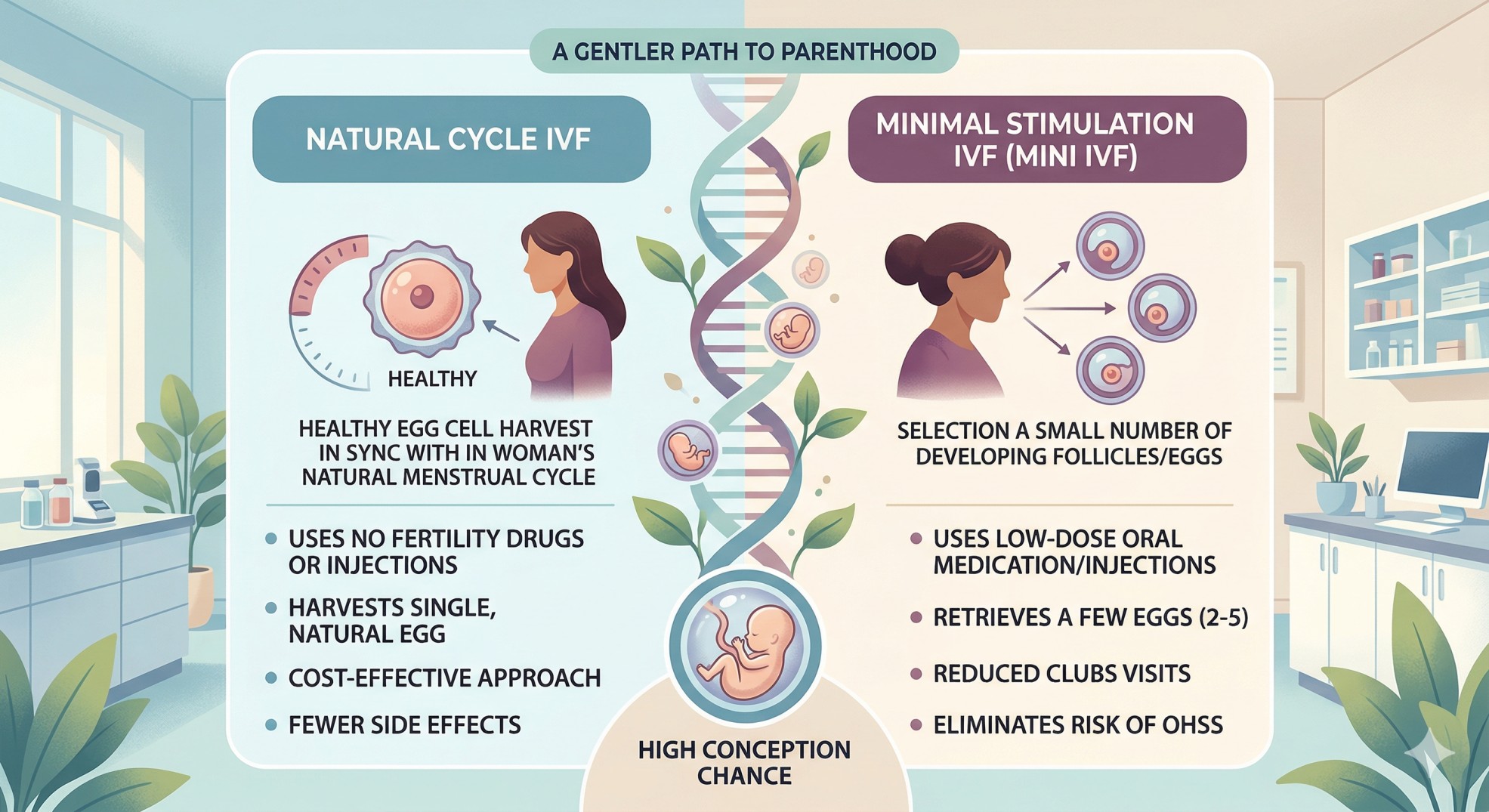
Natural Cycle IVF is the most minimalist form of assisted reproduction. It follows your body’s lead, focusing on the single egg you naturally recruit and release during a monthly menstrual cycle.
-
The Process: No stimulating drugs (gonadotropins) are used. Doctors monitor your natural cycle via ultrasound and bloodwork. Just before ovulation, the single mature follicle is retrieved.
-
The Goal: To collect one high-quality, naturally selected egg.
Pros:
-
Zero Medication Side Effects: No risk of Ovarian Hyperstimulation Syndrome (OHSS), mood swings, or bloating.
-
Lower Cost: Significant savings on expensive fertility drugs.
-
Minimal Stress: Fewer injections and less physical toll on the body.
Cons:
-
High Cancellation Rate: If the egg is released early or doesn’t fertilize, the cycle is over.
-
Lower Success Rates per Cycle: Because you only have “one shot” per month, the pregnancy rate per started cycle is lower than other methods.
2. Mini IVF (Minimal Stimulation)
Mini IVF is the “middle ground.” It uses a gentle protocol of low-dose oral medications (like Clomid) or a very small amount of injectable hormones.
-
The Process: You take mild stimulants to encourage the ovaries to produce a small handful of high-quality eggs—usually 3 to 7—rather than the 15+ sought in conventional IVF.
-
The Goal: Quality over quantity.
Pros:
-
Reduced Chemical Burden: Lower doses mean fewer side effects than conventional IVF.
-
Lower Cost than Conventional: Savings on medication can be thousands of dollars.
-
Better Yield than Natural: Having 3–5 eggs significantly increases the chances of having a viable embryo compared to just one.
Cons:
-
Medication Still Required: You aren’t entirely “drug-free.”
-
Fewer Embryos to Freeze: You likely won’t have many (if any) extra embryos for future siblings.
At a Glance: Key Differences
| Feature | Natural Cycle IVF | Mini IVF |
| Medications | None (or a “trigger shot” only) | Low-dose oral/injectables |
| Egg Yield | 1 egg | 3–7 eggs |
| OHSS Risk | Zero | Very Low |
| Monitoring | Frequent (to catch ovulation) | Moderate |
| Cost | Lowest | Moderate |
Which One Is Right For You?
Consider Natural Cycle IVF if:
-
You have a very high “religious or ethical” objection to creating multiple embryos.
-
You have a history of estrogen-sensitive cancers where hormones are dangerous.
-
You have very low ovarian reserve and conventional drugs fail to produce more than one egg anyway.
Consider Mini IVF if:
-
Diminished Ovarian Reserve (DOR): Your body doesn’t respond well to high-dose drugs (the “Law of Diminishing Returns”).
-
PCOS: You are at high risk for OHSS and need a gentler approach.
-
Age Factor: You are looking for high-quality eggs without the potential “exhaustion” high doses can cause to the follicles.
The Bottom Line
Both Natural and Mini IVF offer a more holistic, less clinical experience than the standard “high-dose” route. However, it’s important to manage expectations: because these methods produce fewer eggs, it may take more cycles to achieve a pregnancy.
Expert Tip: Always ask your clinic for their specific “Live Birth Rate” for these protocols, as many clinics specialize primarily in conventional IVF and may have less experience with low-stim variations.
Are you leaning toward one of these options because of a specific health concern or a preference for a more natural approach?
