For women diagnosed with low ovarian reserve, low AMH, or premature ovarian insufficiency, the path to motherhood can feel uncertain. Traditional fertility treatments may not always produce enough eggs for a successful IVF cycle, leaving many women searching for alternative options.
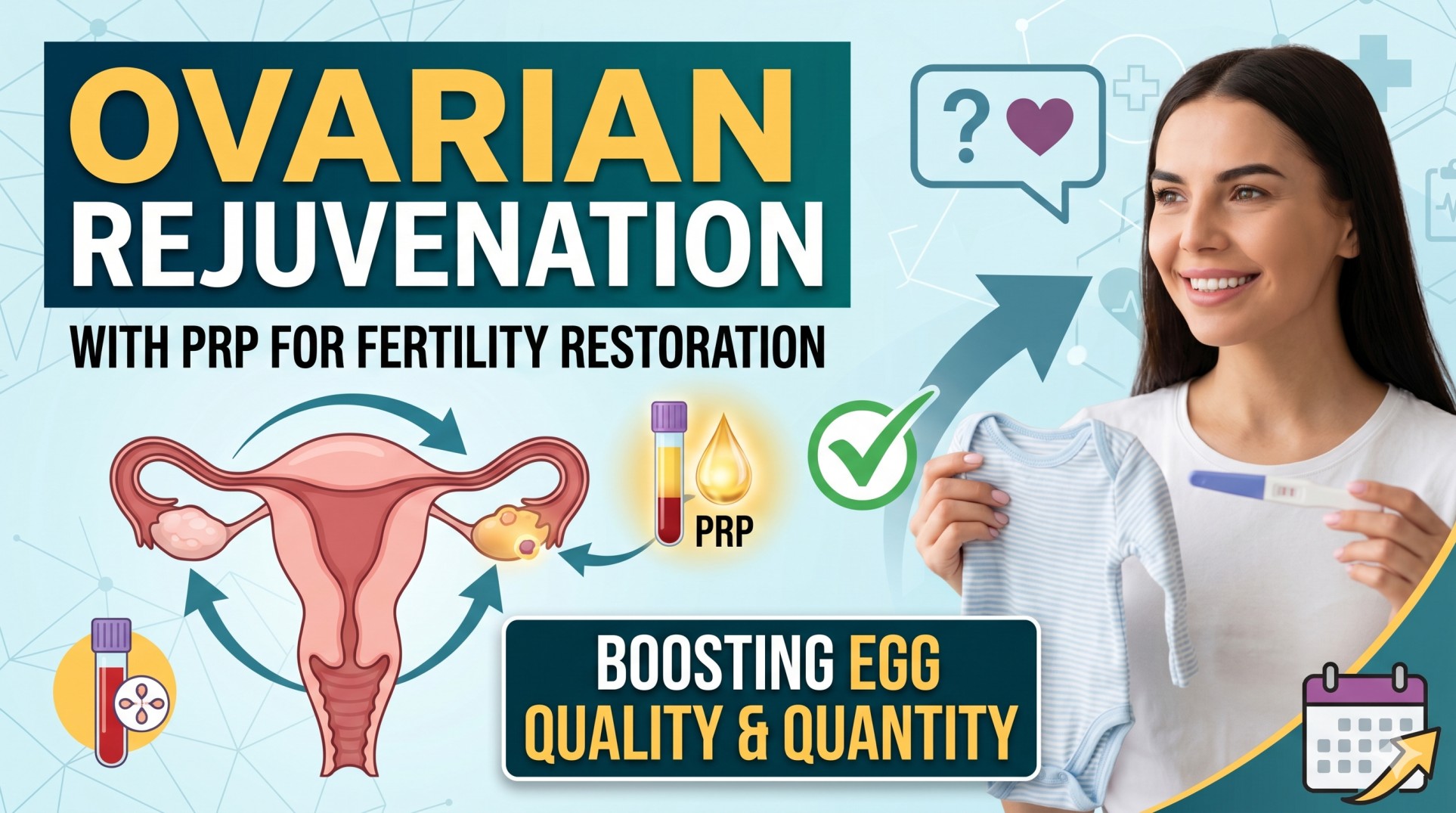
Ovarian rejuvenation therapy is an emerging fertility treatment that uses the body’s own healing power — specifically Platelet-Rich Plasma (PRP) — to stimulate and restore ovarian function. This minimally invasive procedure is offering renewed hope to women who were previously told they had limited fertility options.
At Myra IVF Centre in Kenya, we stay at the forefront of reproductive medicine, offering advanced treatments including ovarian rejuvenation to help women achieve their dream of motherhood.
What Is Ovarian Rejuvenation Therapy?
Ovarian rejuvenation is a fertility treatment that uses Platelet-Rich Plasma (PRP) derived from a patient’s own blood to stimulate ovarian tissue. PRP is rich in growth factors, cytokines, and bioactive proteins that promote tissue repair and regeneration.
When injected into the ovaries, PRP aims to:
- Reactivate dormant follicles that contain immature eggs
- Improve blood supply to the ovarian tissue
- Stimulate the growth of new follicles and enhance egg development
- Increase AMH levels and antral follicle count
- Improve egg quality by creating a healthier ovarian environment
The concept is based on the same regenerative medicine principles used in orthopaedics, dermatology, and sports medicine — now applied to reproductive health.
How Does PRP Work for Ovarian Rejuvenation?
PRP therapy leverages your body’s natural healing mechanisms. Platelets are blood cells that contain hundreds of proteins called growth factors, which play a critical role in healing and tissue regeneration.
In the context of ovarian rejuvenation:
- Growth factors stimulate the development of primordial follicles (dormant eggs in the ovaries)
- Cytokines reduce inflammation and create a more favourable environment for follicle maturation
- Angiogenic factors promote new blood vessel formation, improving nutrient and oxygen delivery to the ovarian tissue
- Stem cell activation may help regenerate ovarian cells and support new follicle recruitment
Who Is a Candidate for Ovarian Rejuvenation?
Ovarian rejuvenation therapy may be beneficial for women experiencing:
- Low AMH levels — indicating a diminished egg reserve
- Diminished ovarian reserve (DOR) — fewer eggs than expected for their age
- Premature ovarian insufficiency (POI) — early menopause before age 40
- Poor egg quality or quantity — affecting fertilization and embryo development
- Failed IVF cycles — due to poor ovarian response to stimulation medications
- Recurrent implantation failure — embryos not attaching to the uterine lining
- Thin endometrial lining — when uterine PRP infusion may also be recommended
Women who have been told that donor eggs are their only option may wish to explore ovarian rejuvenation as a potential alternative before making that decision.
The Ovarian Rejuvenation Procedure: Step by Step
The ovarian rejuvenation process is straightforward and minimally invasive. There are two primary methods:
Method 1: Ovarian PRP Injection
This is the primary method of ovarian rejuvenation:
- Step 1 — Blood collection: A small blood sample is drawn from your arm, similar to a routine blood test.
- Step 2 — PRP preparation: The blood sample is placed in a centrifuge machine and spun for 10–15 minutes to separate the platelet-rich plasma from other blood components.
- Step 3 — Ovarian injection: Using transvaginal ultrasound guidance (similar to an egg retrieval procedure), the concentrated PRP is injected directly into the ovaries.
Duration: 15–20 minutes | Anaesthesia: Local or IV sedation | Recovery: Approximately 1 hour
Method 2: Uterine PRP Infusion
This method is used primarily for women with thin endometrial lining or recurrent implantation failure:
- PRP is infused directly into the uterine cavity using a thin catheter
- The procedure takes approximately 15 minutes
- No sedation is required and there is no recovery period
- Patients can resume normal activities immediately
What Happens After Ovarian Rejuvenation?
Post-procedure monitoring is essential for tracking the effectiveness of the treatment:
- Week 1: Monitoring begins with weekly blood work and ultrasound scans
- Weeks 2–4: AMH levels, FSH levels, and antral follicle counts are assessed
- Months 1–3: Continued monitoring for improvements in ovarian function
- If follicles develop: A natural conception attempt or IVF cycle may be planned
Some patients may require more than one PRP session to achieve optimal results, depending on the severity of their ovarian decline.
Potential Benefits of Ovarian Rejuvenation
Research and clinical experience have shown that ovarian rejuvenation therapy may offer several benefits:
- Increased AMH levels — indicating improved ovarian reserve
- Higher antral follicle counts — more follicles available for stimulation
- Resumed menstrual cycles — in some women with premature ovarian insufficiency
- Better IVF outcomes — more eggs retrieved and improved embryo quality
- Natural conception — some women have conceived naturally after PRP therapy
- Improved endometrial thickness — with uterine PRP infusion
Is Ovarian Rejuvenation Safe?
Ovarian rejuvenation using PRP is considered a safe procedure for several reasons:
- Autologous treatment — PRP is derived from your own blood, so there is virtually no risk of allergic reaction, rejection, or disease transmission
- Minimally invasive — the injection technique is similar to a standard egg retrieval, which is a well-established fertility procedure
- Minimal downtime — most patients return to normal activities within a day
- No synthetic drugs — PRP is a natural biological product, not a manufactured drug
Minor side effects may include mild cramping, spotting, or discomfort at the injection site, all of which typically resolve within 24–48 hours.
Ovarian Rejuvenation vs. Traditional Fertility Treatments
| Factor | Ovarian Rejuvenation (PRP) | Traditional IVF |
|---|---|---|
| Approach | Regenerative — aims to restore ovarian function | Stimulatory — uses hormones to stimulate existing follicles |
| Invasiveness | Minimally invasive (15–20 min) | Involves multiple injections, monitoring, and egg retrieval |
| Drug use | No synthetic hormones or drugs | Requires gonadotropins and other medications |
| Best for | Poor responders, low AMH, early menopause | Women with adequate ovarian reserve |
| Can be combined | Yes — often used before IVF to improve response | Can follow PRP for enhanced outcomes |
Combining Ovarian Rejuvenation with IVF
Ovarian rejuvenation is not a replacement for IVF but rather a complementary treatment that can significantly improve IVF outcomes for poor responders. The typical combined approach involves:
- PRP therapy first — to stimulate dormant follicles and improve ovarian environment
- Monitoring phase — 1–3 months of tracking AMH, FSH, and follicle development
- Customized IVF cycle — once ovarian function shows improvement, a tailored IVF protocol is initiated
- Better response expected — more follicles, better egg quality, and improved embryo development
Ovarian Rejuvenation at Myra IVF Centre, Kenya
At Myra IVF Centre, we are proud to offer ovarian rejuvenation therapy as part of our comprehensive fertility services. Under the expert guidance of Dr. Sarita Sukhija, our approach includes:
- Thorough evaluation — complete hormonal assessment (AMH, FSH, LH, estradiol) and ultrasound to determine candidacy
- Personalized treatment plan — PRP therapy tailored to your specific ovarian condition
- State-of-the-art laboratory — ISO 9001 certified facility with advanced PRP preparation equipment
- Integrated fertility approach — PRP combined with IVF, ICSI, or natural conception support as needed
- Comprehensive monitoring — regular blood tests and ultrasounds to track progress
- Three convenient locations — Nairobi, Mombasa, and Kisumu
With over 15 years of experience and a 79% overall IVF success rate, Myra IVF Centre has helped thousands of couples across Kenya and East Africa build their families.
What the Research Says
While ovarian rejuvenation is still considered an emerging treatment, published research and clinical studies have shown encouraging results:
- Studies have reported increased AMH levels and higher antral follicle counts following ovarian PRP injections
- Some women with premature ovarian insufficiency resumed spontaneous menstrual cycles after PRP therapy
- PRP-treated patients showed improved ovarian response in subsequent IVF cycles compared to previous attempts
- Uterine PRP infusion has been associated with improved endometrial thickness in women with recurrent implantation failure
Larger clinical trials are ongoing, and the medical community continues to gather more evidence. However, the existing data supports PRP as a promising adjunctive therapy for women with diminished ovarian reserve.
Conclusion
Ovarian rejuvenation therapy represents an exciting advancement in reproductive medicine. For women with low AMH, poor ovarian reserve, or early menopause, this minimally invasive PRP treatment offers a chance to improve ovarian function and potentially conceive with their own eggs.
While it may not be suitable for every patient, ovarian rejuvenation — especially when combined with advanced IVF protocols — has given many women renewed hope on their fertility journey.
If you have been diagnosed with low ovarian reserve or have experienced failed IVF cycles, speak with our fertility specialists at Myra IVF Centre to find out if ovarian rejuvenation therapy is right for you.
Book a consultation today. Contact us at +254 786656236 or drsarita2007@gmail.com.
